by Virtual Gathering
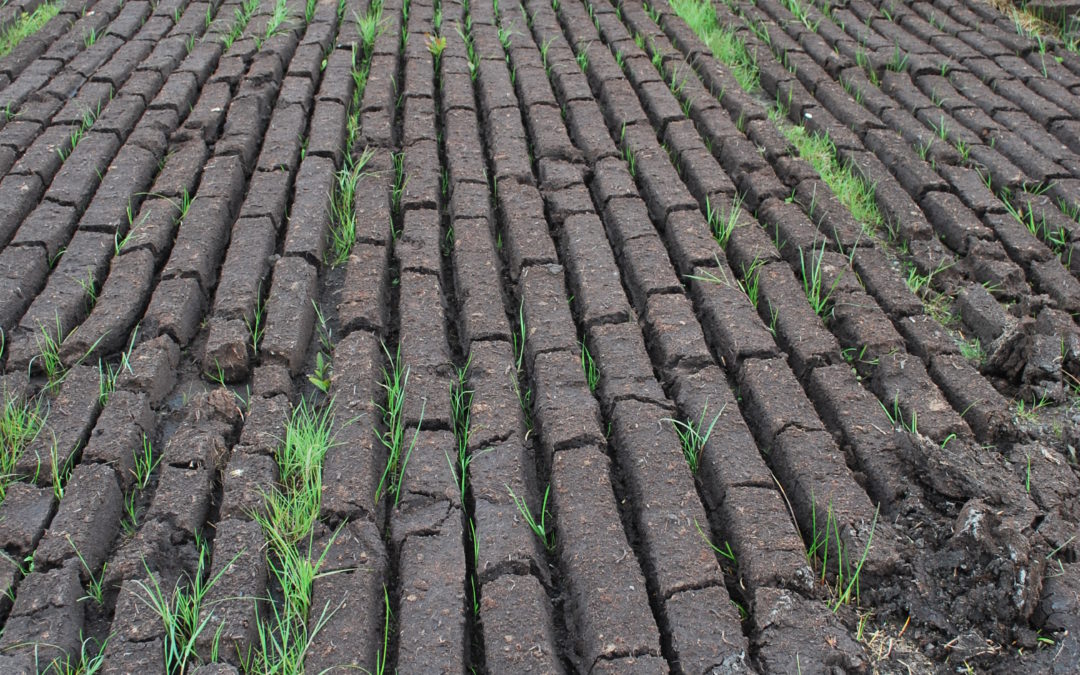
Back in the 60s and 70s cutting the turf was something that went on for three weeks as it was mostly done by cómharing, this meant people helping each other with the task.First of all the bank was cleared, which meant removing the top layer of up to six inches down. For a household it took three to four days cutting with a sleán to secure enough turf for the winter. On high banks in Kilgarvan, six or seven sods in height, four men were needed to spread it far out on the bank – the sleánsman, the man piking after the sleán, the man branching and the man spreading. Depending on the weather, it could take three weeks as bad weather halted the progress.
A day in the bog also secured a good appetite, the tea and food seemed to take on a unique flavour. Conversation was plentiful, but should there be too much conversation the sleánsman could put an end to that by cutting quicker thereby not allowing any time for conversing. Good sleánsmen who come to mind that I have known in Kilgarvan bog are: Johnny Kennelly, Farnastack; Ned Lynch (RIP), Kilomeroe; Micheál Kissane (RIP), Kilgarvan; Joe Foley, Lyre; brothers, Jack and William Walsh (RIP), Guhard; Tom O’Connor (RIP), better known as “Big Tom”, Guhard South; Paddy J. O’Connor (RIP), Guhard South and Mick Walsh, Guhard South and not least of all, myself!
The important thing in high bog was to keep a nice slope to the bank and to have a nice sleán. There could be a bit of fun in the bog also. One evening, Denis “The Black” Dowling (RIP) and Jack Walsh came to the bog. Denis shouted over to me, “ is there any chance you would dance a couple of Jerry Molyneaux’s steps up on the high bog”. I said I would if he was able to lilt it. He did it in style and I danced a couple of steps of a hornpipe wearing a pair of wellingtons and we had an audience within minutes.
Nowadays with the turf-cutting machine and Hymac, what was a week’s work with a sleán is reduced to a couple of hours.
In my time a day in the bog meant long hours of work. Now the highlight of the Seán McCarthy Weekend and The Dan Paddy Andy Festival is the walk and then the tea in the bog.
How times have changed!
by Virtual Gathering
The Central Ballroom, Ballybunion
In 1954/55 Matt O’Sullivan returned from England to Ballybunion and he bought the Central Hotel. He had a vision and that vision was a ballroom, so he proceeded to build a ballroom where the Golf Hotel now stands. Before this was built dancing took place at the Pavillion/Ballerina occupied now by an amusement centre.
The Central Ballroom in Ballybunion was opened on the 29th of June 1956. The opening of this establishment was the main topic of conversation by the people of North Kerry and West Limerick. I believe that there was a little bit of opposition from an English band, namely Pete Roxburgh’s, but the opening went ahead and the ballroom was opened on the said date by Pete Roxburgh and guest, singing celebrity Joseph Locke. The scenes on the night were covered by the Kerryman and it estimated that 10,000 people turned up on the night.
Pete Roxburgh played for some time during that summer but the band broke up. This proved to be a godsend for the Maurice Mulcahy band from Michelstown and they made their first appearance in the Central on Saturday night the 8th September. The band then got a three-month stint in the following years starting in June and finishing the week of the Listowel races. This continued until the mid-1970s. Maurice Mulachy and his band stayed in Ballybunion for the duration of the summer. Their families also stayed. Their signature tunes were “From a Jack to a King” “Falling in love” and “Magic Moments”.
The cost of a season ticket was three pounds and ten shillings. These tickets did not cover you on a benefit night when you had to pay. Dancing was for three nights a week in the month of June and seven nights during July and August. In July, a bus-load of women would arrive to Ballybunion and the local men would dance the summer away with them.
In 1968 Matt O’Sullivan’s son, Kenneth, acquired the Central and he built a new ballroom at the back of the existing one and had the hotel demolished. This new ballroom was opened in 1968. The late Bill Fitzgerald was working at the ticket office and he estimated that approximately 3,000 patrons passed through the door some nights. There was no alcohol served in the Central, just a mineral-bar. The most popular mineral sold was “Pep Apple Juice”. This was made in Brosna. The takings from the mineral-bar paid for the running expenses of the hall. The order of romance was a few dances, an offer of a mineral and sometimes a coffee and a Club Milk at Danna’s, then on to the Castle Green for that moonlight walk and a glimpse of heaven, if one was lucky enough!
The door manager was for a time was Victor Rattory, while The Ball Connor, Jack Savage, and John Rohan also worked there. Jet Costello was the floor maintenance man. His duty was to keep the floors polished.
The Central Ballroom has become part of Ballybunion folklore. Even as the people who danced there grow older, the photographs and accounts like these will keep the folklore alive for future generations.
by Virtual Gathering
Please post your thoughts, views, and photos on this question so that all our diaspora can engage together with the BPM and each other.
We also welcome any other photos, verses and articles for the upcoming 2016 BPM which you might like to add in our “Contact Us” section
by Virtual Gathering
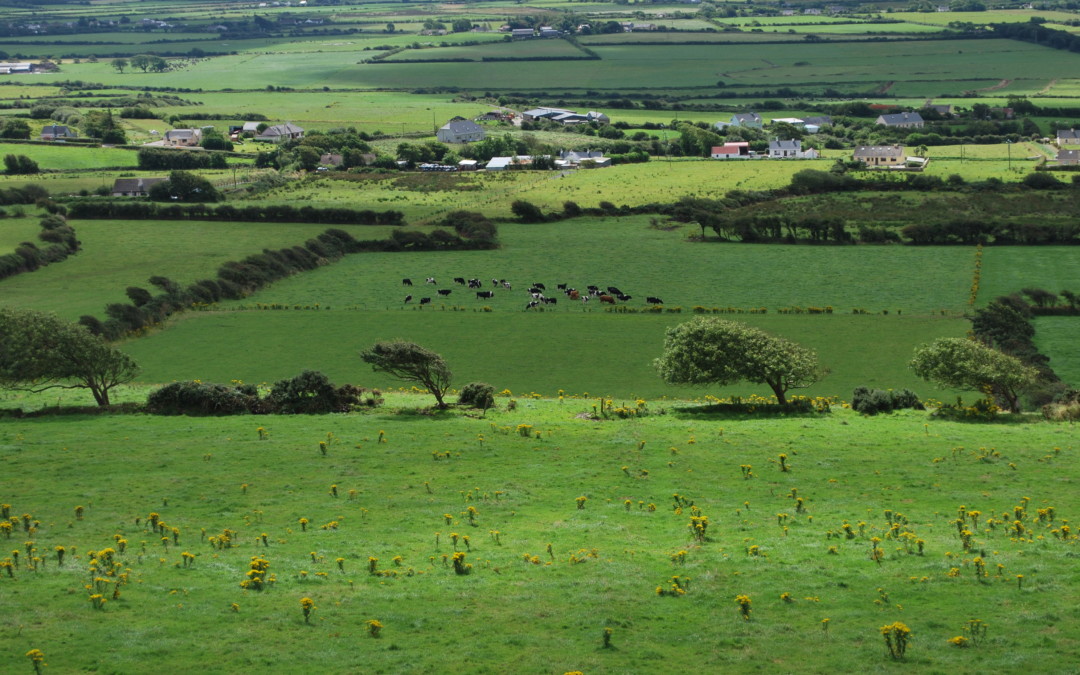
In 1934 when Lisselton Creamery opened first, there were 364 farmers bringing milk. They were short one for every day of the year! There had been a creamery years before at Lisselton Cross where the car sales premises are now, and there had been a creamery at the Switch in Francis’s Field. The Lartigue ran beside it. There was another one at the Store Height on the left going over the Chapel Road in the old days. There was the Travelling Creamery in the 1950s and later. It was a big lorry which came to the creameries and collected milk.
My days in the creamery started on Friday, May 15th, 1965. It was a good day to start – at the end of the week – but I had to work all the weekend.
I got the job through Richard O’Connor (RIP). He owned a shop across from the creamery and was a good neighbour and friend of mine. He told me to go to Kit Ahern (RIP) in Ballybunion. I had no car so Richard drove me to see Kit, who said she would let me know the following week. She contacted my mother then and said there was a vacancy coming up and that Bill Hartnett (RIP), the manager, would call me. And he did and so off I went to Lisselton Creamery. Nobody from the family before had worked in the creamery. I was throwing in the milk there and was there for only a few months. I wasn’t going to stay at all in the start. I found it very hard. But I got used to it and loved it there after a while. It was a dangerous job with the acid and the caustic. Nitric acid and caustic were used for cleaning the pipes and sulphuric acid for testing the milk. A drop of milk was put into the sulphuric and it would tell what percentage of cream was in the milk. I got burned twice with acid. It burned through my trousers and left its mark.
Then I spent four years going around to the branches. I used to drive to different creameries where I was driving the forklift, painting, unloading manure and covering for holidays and sick leaves. I went to most of the branches during these years and worked with six or seven managers.
After a while I was moved to Coolbeha. I used to have to get up at half-past five in the morning. An early rise! My Dad was alive at the time and he used to call me. I bought an Anglia car with a ZX registration. I had it for about a year and a half and then I bought a Mini from Horan’s who had come to Listowel. I got a loan of £200 off the Dairy Disposal Board and the creamery manager assured the Board that I wouldn’t go off once I got the loan! Later, in the 1970s, I had a Vauxhall.
In Coolbeha there wouldn’t be time for a morning break as I was feeding coal into the boiler. When a farmer arrived with the new milk, it often took three men to lift the tanks and pour it in. The fella before and after him would give him a hand. The milk was then separated and the cream would go into separate containers. The skimmed milk would go into different containers and then given out to the farmers who fed calves with it. We had an hour for lunch from one till two. I used to come home from Coolbeha for my lunch most of the time. In the afternoons I used to tidy up the stores and the yard and organising the manure for the next day. When I started first we used to finish at a quarter to six. Then later that was changed to half-five and then to five o’clock. Babe Dowling had a shop across the fence from the creamery and people did their shopping there. I spent nine years in Coolbeha Creamery.
After Coolbeha I came back to Lisselton Creamery and spent twenty years there. There were 230 farmers bringing milk there at that time. I can remember the farmers who had donkeys and carts. I remember John Costello (RIP) from Ballyegan had one. I remember Paddy Henchy (RIP) from The Hill and John Healy (RIP) and others who brought their milk in those days. Mattie Deenihan back the road used always have a chat. Max Feeney (RIP) used to come for Mick Finucane and was very witty. One day I said to him “You didn’t throw out all the milk!” and Max said to me “What about the cats!” Mike Nolan and John McMahon were regulars. A few women used to come to the creamery and I remember Peggy Finucane (RIP) well. There was also a woman from Coolard, Mrs Moriarty (RIP) who used to come with a donkey. Seán Deenihan (RIP), and Paddy Sullivan (RIP) from Lacca were among the others I saw every day. All the farmers were nice to me. Meeting the farmers was great every day and having the craic!
There were a lot of horses before the tractors were used and then the cars came with the car-trailers. They were the worst because they were too low and you would have to bend down to lift them up. In the finish they had bulk tanks. At a later stage we had two “soakers” in Lisselton. These were big tubes that sucked the milk out of the tanks and there was no need then to lift them up.
The creamery book was an important item for every farmer as it kept an account of the milk given in, as well as butter given out by the creamery. These were green and every farmer had his own number. Every month then the creamery cheque was issued and that was very important! It was a long time though to wait for many farmers! The manager and myself used to get the cheques ready, and it took a long time to do this. You would be working on them till seven in the evening sometimes.
There was manure sold at the creamery also – Pasture Sward, Cut Sward and Nitrogen.The creamery manager was an important man. I worked with a lot of them. Bill Fitzgerald (RIP) was in Lisselton and Coolbeha and was a very nice man. I worked with Paddy Dowling (RIP) in Kilcolman; Jimmy Hanrahan (RIP) in Ballylongford, and Tony Sullivan in Tarbert. The people who worked with me at the creamery in Lisselton were lovely. I worked with Tony Mason (RIP), Willie Dee (RIP), Dave O’Sullivan (RIP), Eamon Holly and Paddy Halloran.
My daughter Eileen used to help me during summer holidays in the later years, answering the phone and coding products. Even though she didn’t get paid, she loved it and it gave her great experience. When some people would ring up and hear Eileen’s voice, they would hang up because they thought there was no woman working in the creamery! The phone number of the creamery was (068) 47104.
I was a store manager for the last years as there was a farm shop opened and we sold all sorts of items for farmers.
My own last day at the creamery was June 12th, 1998. I became very ill and I was sent to the hospital. I am the last permanent employee in Lisselton Creamery. I had spent thirty three years and one month working at the creameries altogether. I missed it a lot.
The creamery closed down for good on June 1st, 2001… and for me, it was the end of an era!
by Virtual Gathering
I am a third year student in Waterford Institute of Technology. I am aiming to achieve a BA Honours in Health Promotion at the end of the four year course. WIT is one of the few colleges in Ireland who provide this course. When deciding what course to do, I attended a talk in WIT about what health promotion is about. After that talk I had no doubt this is the area I wanted to study and the career path I hoped to follow.
Waterford Institute of Technology is a university-level institution in Ireland. The IT facilitates over 10,000 students and employs over 1,000 staff. The institute is made up of five campuses all together. The main campus is situated on the outskirts of the city. It is a very modern-style campus with state of the art buildings. In this campus my course takes place. I believe this is an advantage as the main college library is situated here. This building can accommodate 1,000 students and staff over its three floors. Despite the exceptional size of the building and the level of facilities it provides, at times it cannot cope with the numbers of students. Coming up to exams, I have experienced walking around the study areas on all three floors and being unable to find a seat or any space to set down a book. The demand for this library is amazing. In my opinion, it is the best element of WIT as not many other IT facilities would have anything up to this standard. Access to the library is not easy. In order to enter one must scan their WIT student or membership card. Entry is not permitted without proof of membership.
Health promotion is primarily about enabling people to control their own health by adopting a healthy lifestyle. It is a part of primary health care concentrating on prevention and early detection of illness and disease. This can be done through direct work with individuals or with their environment. It is a moderately new area of work in Ireland as the health services here focus on secondary care. I am very interested in learning about health in general. However, studying health promotion has opened my eyes to many health issues where prevention is vital. Therefore, I now see health promotion as the most important area of health care and an area I am becoming captivated in.
From doing the course the past two years it has made me realise how health promotion has been a factor in my education to date. I went to Lisselton National School. While I was in this school health schemes were introduced which affected my own lifestyle and the whole community. The healthy eating programme was one thing which I think was very important. This allowed all children in the school to take on a healthy diet from a young age. As well as this, the school took part in the Happy Heart Skipathon every year. This got us involved in physical activity and encouraged us to take up this type of exercise. I believe this was very effective and beneficial to me.
This health promotion continued into my secondary education. I went to Tarbert Comprehensive School for six years. During these years, health promotion was taught to us in SHPE class (Social, Personal, and Health Education). This subject was taught from first year until Transition Year. Health promotion was also integrated into physical education by encouraging adolescents to become more involved in sport and exercise.
The next stage of my course is work placement. I will be working in Waterford Health Park for one semester. During this time I hope to introduce more health promotion programmes and education about the subject into both primary and secondary schools. I believe that introducing this in schools is vital for change, as children are the future.
